


Army Musician Proficiency Assessment
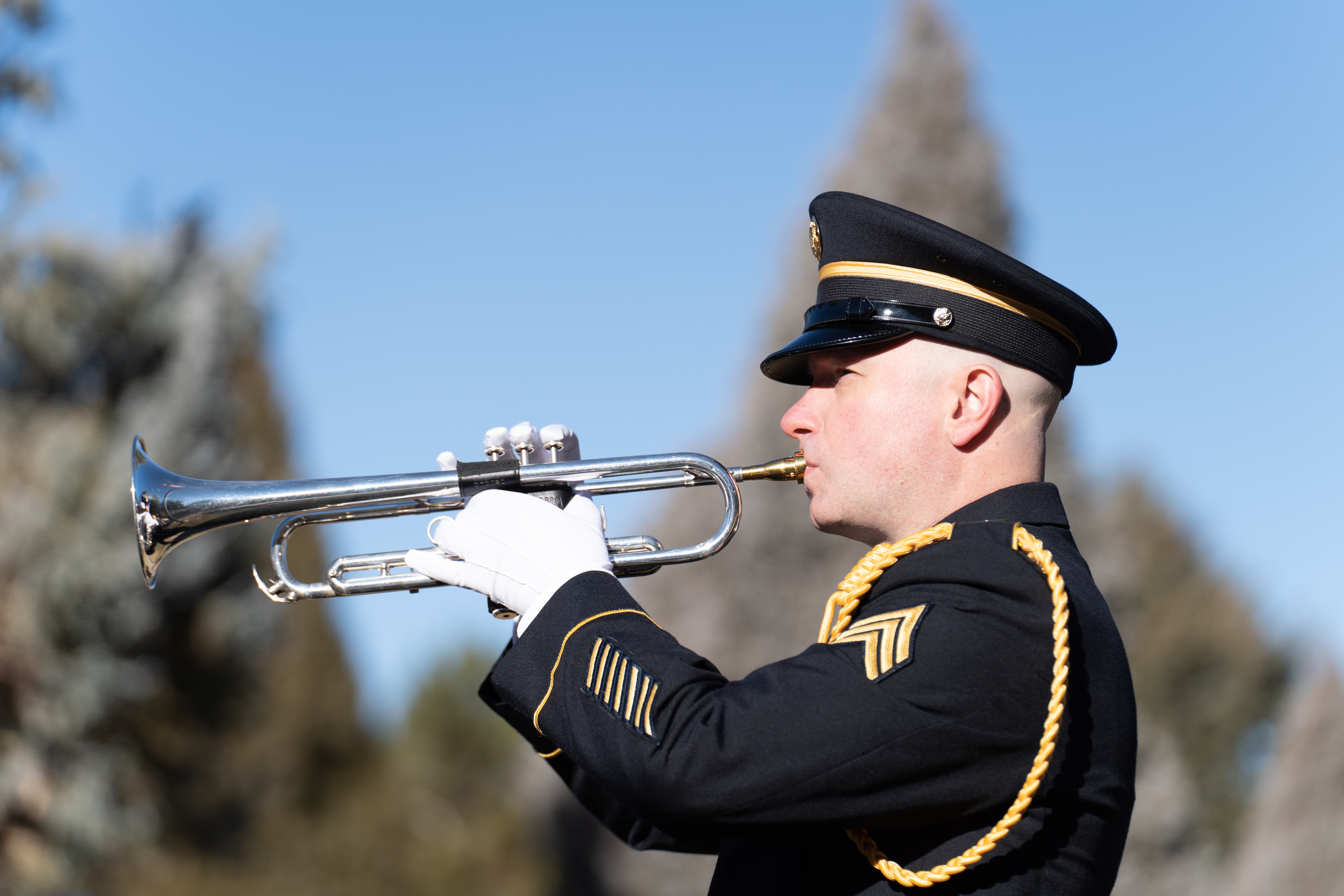
Joining the 101st Army Band or any Army band requires passing an audition, known as the Army Musician Proficiency Assessment (AMPA). This page gives an overview of the audition. We strongly encourage visiting us at a rehearsal or performance to learn more about us before beginning the audition process. Please contact SSG Ryan Dupuis at 101stabauditions@gmail.com or 720-584-3693 for full details and scheduling.
Instruments
Brass: Trumpet, Euphonium, French Horn, Trombone, Tuba
Woodwinds: Flute, Oboe*, Clarinet, Bassoon*, Saxophone
Rhythm: Percussion (drum set/mallets/auxiliary), Keyboard, Guitar, Electric Bass
Other: Voice*, Production Technician*
*Some instruments/skills have special or particular audition/score requirements. See the Rubric section below or contact us for more details.
Prepared Music
The first half of the audition is prepared music. Wind instruments require at least three selections of contrasting styles/genres, not to exceed five (5) minutes. This can include, but is not limited to: solo/concerto repertoire, orchestral/band excerpts, jazz/funk charts, chamber music, or anything else which demonstrates your abilities. You should play the most difficult music that you can play well to achieve the highest score. If you aren’t sure what to prepare, we can help with suggestions.
Rhythm instruments have slightly different requirements. Percussion requires at least four selections performed on a drum set with backing tracks. Keyboard requires at least four pieces: one or more on solo piano and at least two with backing tracks, preferably demonstrating non-piano sounds (organ, clavinet, synthesizer, etc.). Guitar and bass players should prepare at least four pieces performed with backing tracks. Vocal requires three to six selections performed with microphone, sound system, and backing tracks. All rhythm section auditions require commercial music (pop, rock, jazz, blues, Latin, etc.) as a selection.
Quickly Prepared
The second half of the audition is quickly prepared music. You will receive a packet of music to learn 24 hours before your audition time. Once you receive the music, you have until your audition time to prepare it. Read, listen to, and practice or whatever methods work best for you. This section is intended to more closely simulate a real-world scenario.
Wind instruments receive six excerpts, which vary by instrument but may include: concert band, chamber ensemble, simple meter march, compound meter march, swing, and commercial.
Percussionists receive eight selections, two drum set charts, two concert snare excerpts, two marching snare excerpts, and two mallet passages. Keyboard, guitar, and bass players receive five selections, three performed with backing tracks, two without. Vocalists receive four karaoke-style pieces and one acapella.
We can provide a suggested reading list or some examples if needed to give an idea of what to expect. Contact SSG Dupuis to get all the instrument-specific information you need.
The Rubric
The audition is graded using a rubric with six categories scored from 0-6 points, which add up to a maximum value of 36. The categories and performance criteria vary depending on the instrument. A score of at least 18 overall points is required to pass the audition to enter the band, except for oboe, bassoon, and voice which require a 24. Please contact SSG Ryan Dupuis to get the grading rubric for your specific instrument.

Results
Your audition will be administered, video recorded, and sent to the United States Army School of Music to be graded. Your score and feedback will be given to you when they are finished. If you do not pass your audition, you can work on the feedback that you receive and try again. There is no limit to the number of times that you may audition.